Japan has a way of making even the most seasoned traveler feel like they're seeing the world for the first time. In the summer of 2024, we spent four days moving through the Kansai region — Kyoto, Osaka, and a brief detour into Kobe — and every frame I shot felt like a discovery.
This isn't a conventional travel guide. It's a photographer's journal: the light I chased, the moments I almost missed, and the places worth lingering in. If you're a brand, agency, or publication looking for authentic editorial coverage of Japan, this post is a window into how I work on location.

Kamo River in Kyoto, Japan
Kyoto served as Japan's imperial capital for over a thousand years, and that weight is visible in every corner. The architecture earns its reputation, but what drew me in was the quieter texture of the city — the Kamo River at dusk, the stone-paved backstreets of Gion, the deliberate pace of life that resists the modern noise around it.
For photographers, Kyoto is a city of soft light and hard contrast. Early morning is non-negotiable: by 8 a.m., the most iconic spots are crowded. Golden hour along the Kamo River, however, remained unhurried — one of the few places in Japan where the evening light felt private.
What I shot: Kamo River, traditional wooden machiya townhouses, temple districts, quiet neighborhood side streets.
Gear used: Sony a7IV, natural light only — no flash, no artificial fill. The editorial intention was always authenticity over perfection.
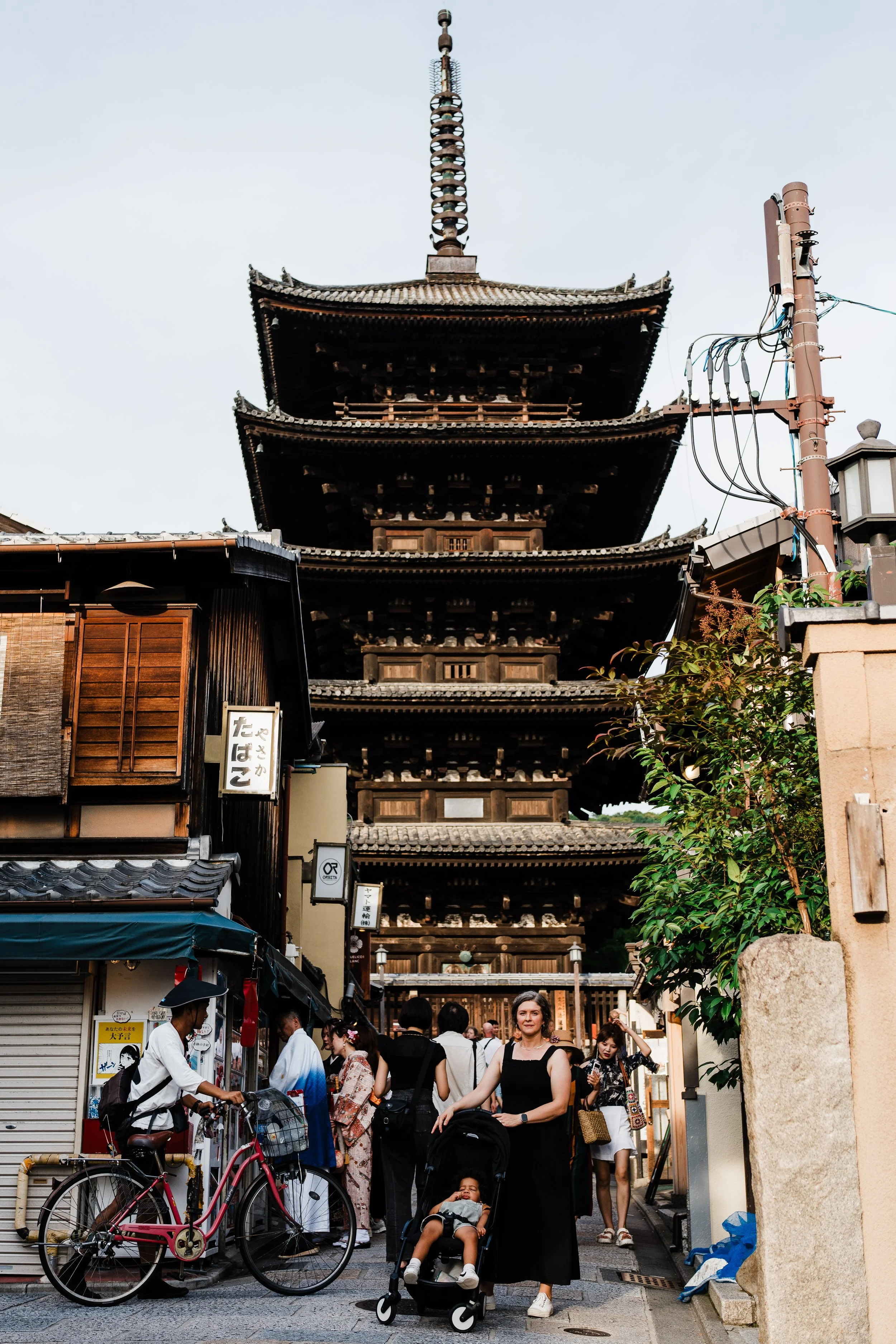


““七転び八起き” (Nanakorobi yaoki - Fall down seven times, stand up eight)”


Osaka
〰️
Osaka 〰️

Where Kyoto rewards patience, Osaka rewards presence. It's louder, grittier, and more immediate — a city that photographs well precisely because it doesn't perform for the camera. The Dotonbori district alone is a masterclass in layered visual storytelling: neon signage, canal reflections, and the relentless motion of street life colliding in a single frame.
For lifestyle and food brands, Osaka's culinary culture is world-class creative territory. Takoyaki vendors, covered shopping arcades, and the raw energy of Kuromon Market offer the kind of authentic content that resonates far beyond a standard campaign shoot.


Kobe often gets overlooked in the Kyoto-Osaka circuit, but it earned its place in the trip. The waterfront, the European-influenced Kitano district, and the clarity of the harbor light offered a completely different visual register — calmer, more architectural, cinematic in a different way.
For brands seeking variety within a single regional trip, the Kansai corridor — Osaka, Kyoto, and Kobe — delivers three distinct visual environments within an hour of each other.
Shooting in Japan reinforced something I already believed: the most compelling travel content doesn't come from a shot list. It comes from showing up, staying curious, and letting the place lead. If you're a travel brand, tourism board, or lifestyle publication looking to document Japan authentically, I'd love to talk about what a collaboration could look like.
Working on an editorial project or campaign in Japan or another international destination? Get in touch — I'm available for commissioned travel, lifestyle, and brand work worldwide.