There are places you visit and places that stay with you. Banff National Park, in Alberta's Canadian Rockies, is unambiguously the latter.
I shot this trip in August 2019, and the images still sit among my personal favorites — not because the locations are easy (they aren't), not because the conditions cooperated (they didn't), but because Banff operates at a visual scale that makes every frame feel consequential. The mountains are enormous. The water is an impossible shade of glacial turquoise. The light, when it arrives, hits everything at once.
This is the photo journal from two days in and around the park — the town of Banff itself, the Valley of the Ten Peaks, Moraine Lake, Lake Louise, and a horseback ride through the backcountry to the historic tea house above the treeline. For outdoor brands, adventure lifestyle companies, luxury travel publications, and tourism campaigns covering Western Canada, this post documents what shooting in Banff actually looks like — conditions, light, and all of it.
Day 1 — Banff Town & the Valley of the Ten Peaks
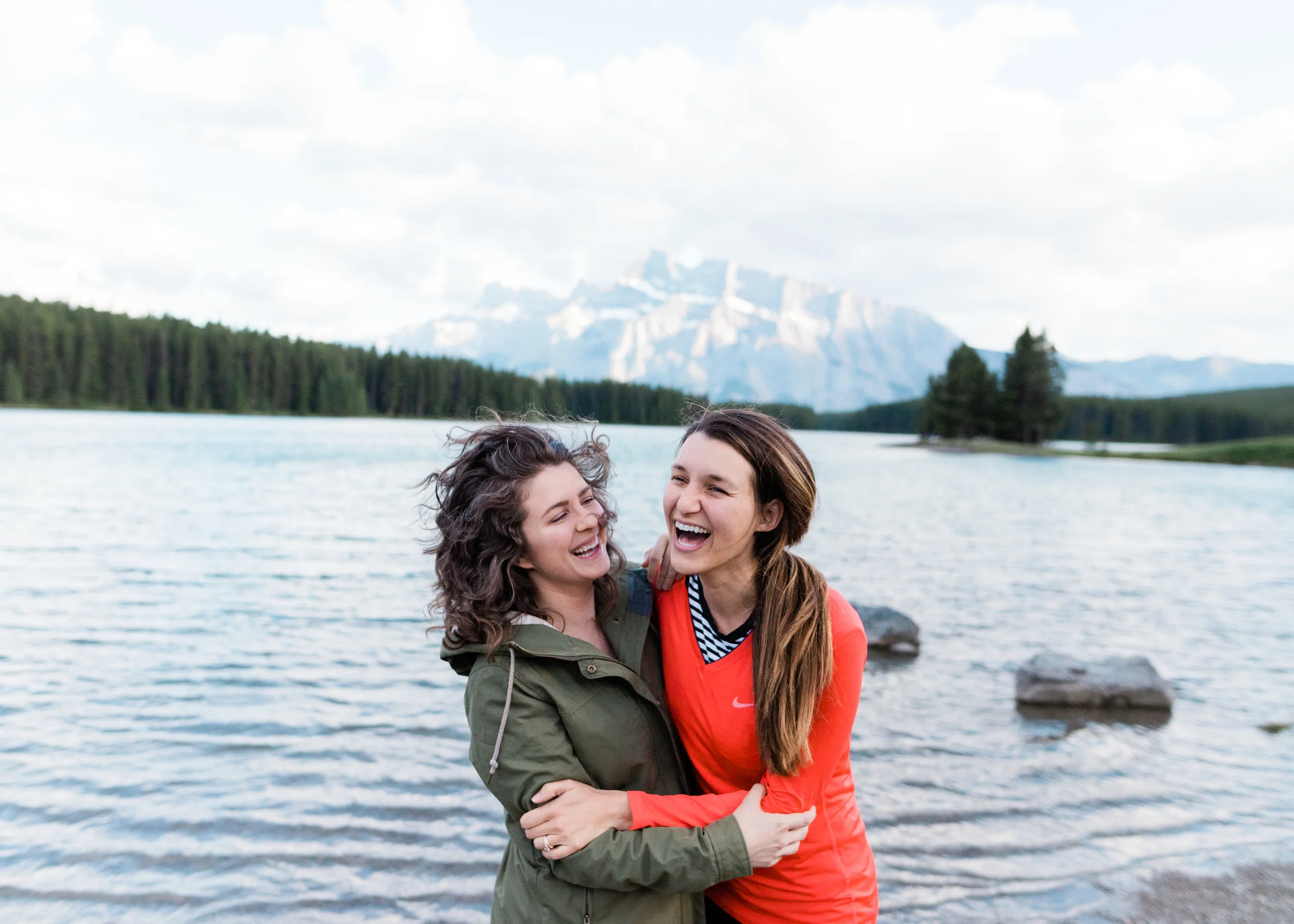
Arriving in Banff, the first thing that registers is the proportion. The town sits inside a mountain bowl, ringed on every side by peaks that dwarf everything human-built below them. It's one of those rare places where the architecture — charming as Banff Avenue is — simply doesn't compete with its surroundings. The setting is the subject.
The Bow River valley, the Hoodoos along the canyon trail, and the views from Tunnel Mountain Drive give the first day a broad editorial range — from intimate riverside scenes to wide, sweeping mountain panoramas. The light in the Rockies at this latitude has a particular quality in summer: long, golden, and arriving at a low angle that makes even ordinary subjects feel worth stopping for.
For travel and lifestyle brands, Banff town itself is frequently underused as a shoot location. The combination of the mountain backdrop, the walkable main street, and the range of accommodation from backcountry lodges to luxury resorts like the Fairmont Banff Springs gives it a versatility that purely wilderness locations don't offer.
What I shot: Bow River reflections, Tunnel Mountain trail views, Banff Avenue and mountain backdrop, Bow Falls, canyon rim formations.




Next Day
Day 2 — Moraine Lake, Lake Louise & the Tea House Horseback Ride
The second day was the one that earns Banff its reputation.
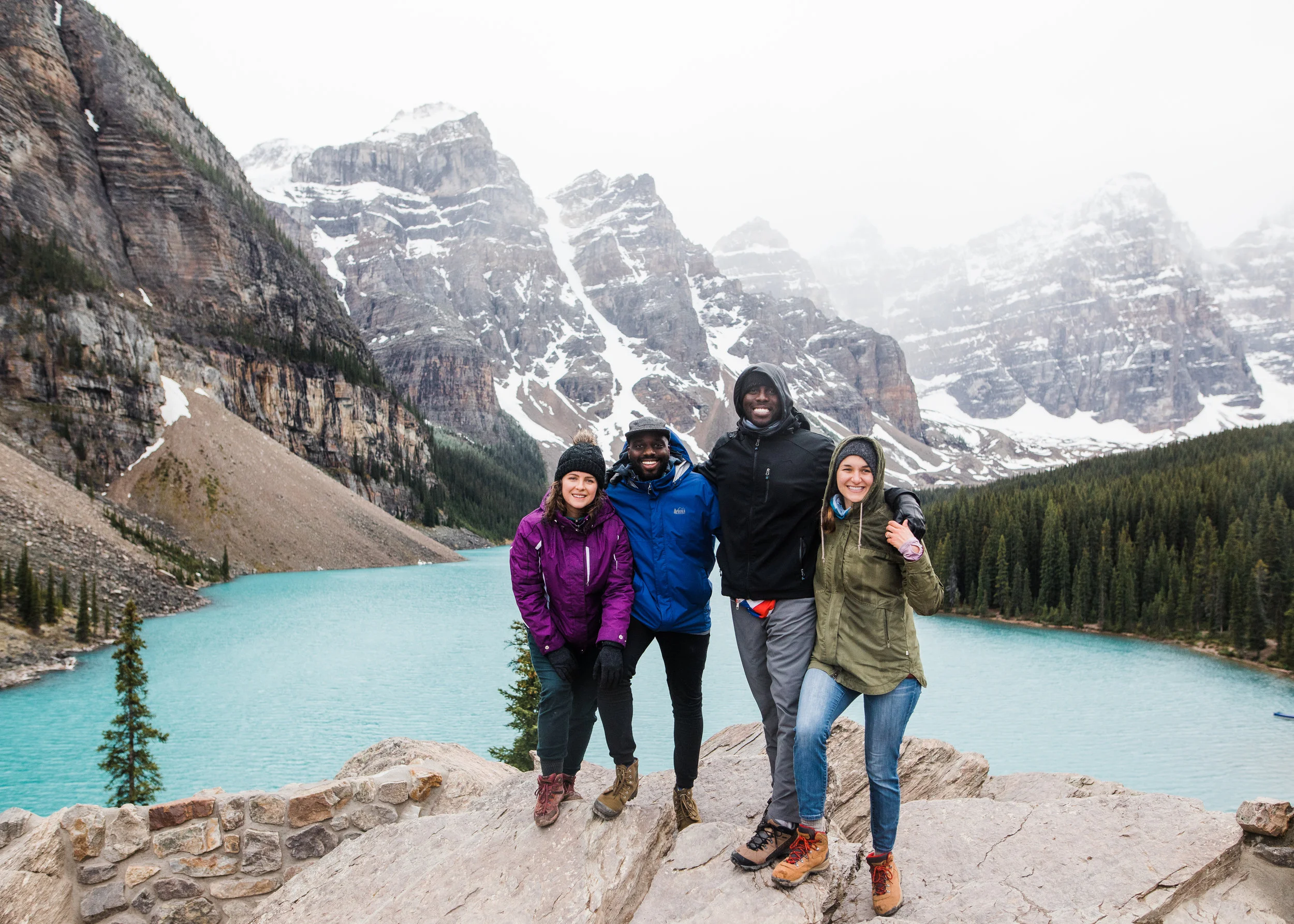
Moraine Lake should be approached as early as humanly possible — and in the summer months, that means pre-dawn. The Parks Canada reservation system exists for good reason: by 8 a.m., the lakeshore is full. But in the blue-grey light before sunrise, with the Valley of the Ten Peaks reflected in water so still it reads as a mirror, it's one of the most compositionally perfect natural environments I've ever stood in.
The color of the water is not a filter or an edit. Moraine Lake's signature turquoise comes from glacial rock flour suspended in the melt — fine particles that refract light at a specific wavelength. Photographically, it creates a challenge: the color is so vivid and so specific that accurate reproduction requires restraint. The temptation is to push the saturation; the better instinct is to pull it back and let the subject do the work.
Lake Louise sits about 15 minutes from Moraine and operates on a similar logic at greater scale. The lake is larger, the Fairmont Chateau Lake Louise commands the eastern shoreline with unmistakable Victorian grandeur, and the Victoria Glacier sits at the far end of the valley in a way that makes every wide composition feel monumental. It's a legitimately iconic location — and like all iconic locations, it rewards photographers who look past the obvious shot.
For luxury hospitality brands, the Chateau Lake Louise is one of the most storied shooting locations in North America. The combination of the heritage hotel architecture, the glacial lake, and the mountain backdrop gives it a visual language that works across campaign aesthetics from classic to contemporary.
The Tea House Horseback Ride was the unplanned highlight of the trip. We rode up from the Lake Louise stables along the backcountry trail to the Plain of Six Glaciers Tea House — a historic alpine hut that's been serving hikers and riders since 1924, accessible only on foot or horseback. The ride climbs steadily through subalpine forest before opening onto a glacial moraine with views back down the lake that stop you mid-conversation.
Then the weather happened.
Within the span of a few hours on that trail, we got sun, cloud cover, snow squalls, and freezing rain — a full seasonal range compressed into a single afternoon. For a photographer, it was a gift. The changing conditions meant constantly shifting light, dramatic cloud formations building and dissolving over the peaks, and that particular sharpness the air takes on just after a mountain storm passes. The images from those hours are some of the most atmospherically interesting I've made anywhere.
What I shot: Moraine Lake at dawn and mid-morning, Valley of the Ten Peaks panoramas, Lake Louise waterfront and Chateau, backcountry trail through subalpine forest, Plain of Six Glaciers moraine, storm light on the peaks, alpine wildflowers and rock formations above treeline.




On Shooting in the Canadian Rockies
Banff rewards preparation and punishes assumptions. The weather is genuinely unpredictable at elevation — August can deliver summer warmth and a full snowstorm within hours of each other, as this trip proved. The permit and reservation systems for the most popular locations (Moraine Lake in particular) require advance planning. And the crowds at peak season demand early starts and a willingness to work around other people in the frame or wait them out entirely.
All of that said: the visual return on investment here is as high as anywhere I've shot. The combination of glacial lakes, alpine terrain, historic lodge architecture, and the sheer scale of the Rocky Mountain landscape gives Banff a creative range that's almost unmatched for outdoor and adventure brands. You can shoot wilderness isolation and luxury hospitality on the same day, in the same park, often within miles of each other.
For brands and agencies considering Banff as a campaign location: the logistics are more manageable than the remoteness suggests, the scenery exceeds every expectation, and the library of images you can build across two or three shooting days is genuinely comprehensive.
Banff National Park is one of the most photographed places in the world — and it's that way for good reason. For outdoor brands, luxury travel, adventure lifestyle campaigns, and editorial travel publications covering Canada, it delivers a consistent, extraordinary visual environment across every season.
If you're planning editorial or campaign work in the Canadian Rockies — or anywhere in the American and Canadian West — I'd love to talk about what a collaboration could look like.
Available for commissioned travel, outdoor lifestyle, and brand photography internationally. Get in touch.